Getting Access
What to Do With a Parent's Car When They Have Dementia
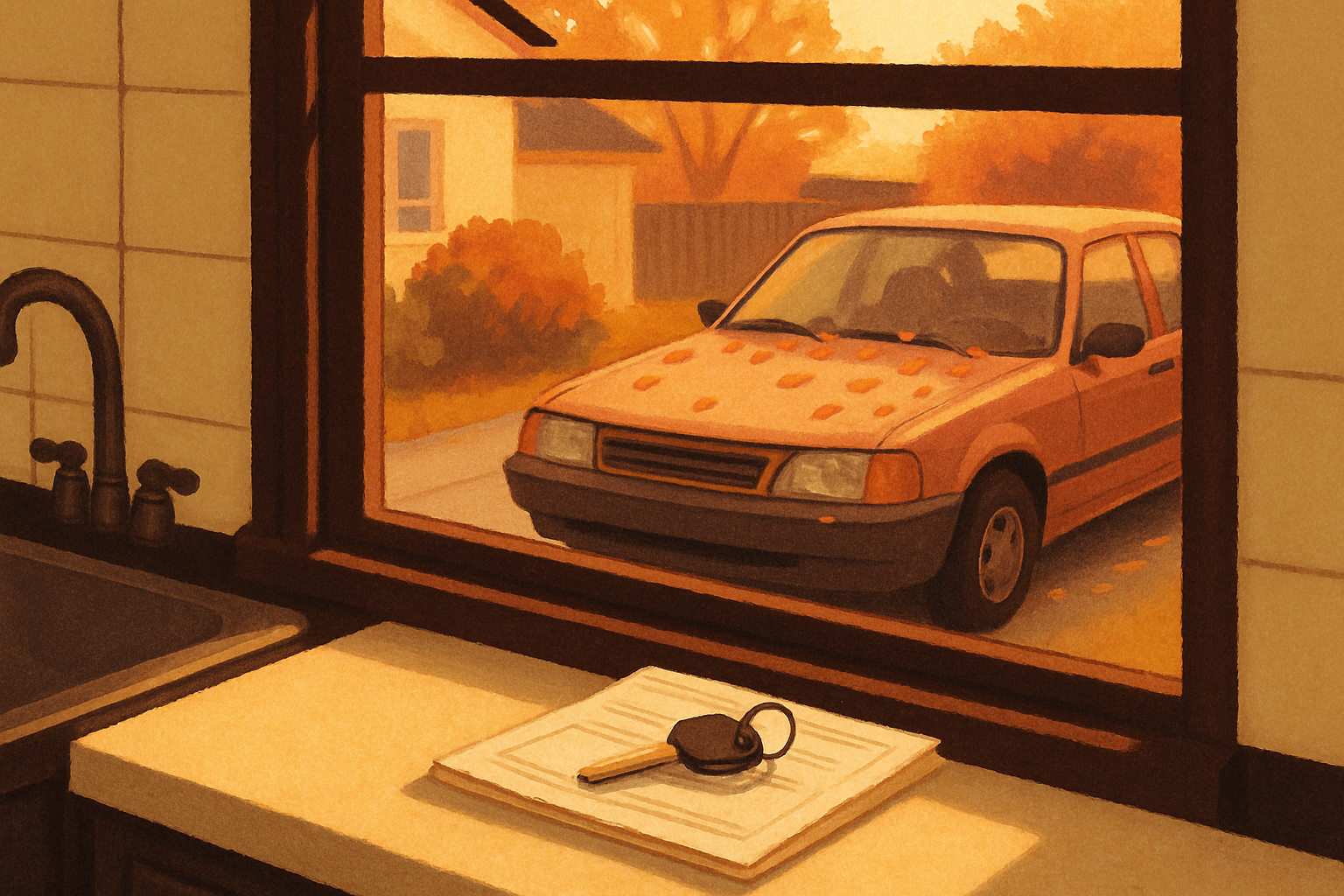
My mom's car sat in her driveway long after anyone had any business driving it. Paid off years earlier, still insured, still registered, still collecting whatever fell out of the trees. Nobody had made a decision about it. We'd just quietly stopped handing over the keys.
When I finally dealt with it, the part I'd been dreading turned out to be the easy half. I found the title in a drawer while going through her papers. That was luck, not planning. The half I hadn't thought about was the insurance.
Do I have to put my parent's car in my name to drive it?
Usually not. Owning a car and being covered to drive it are two separate questions, and it's the insurance policy, not the title, that answers the second.
Families reach for a title transfer because it feels like the official move. It rarely is. A car titled to your parent can be driven by you with the insurer's blessing. A car titled to you with no coverage in your name is the problem you were trying to avoid.
So make the phone call before you do the paperwork, and be straight with the carrier about the dementia and about who's driving now. Insurers rate a vehicle on who drives it and where it's kept, and a policy describing a household that no longer exists is what fails at the worst possible moment. Nobody finds that out on a good day.
What should I do about the car insurance when my parent stops driving?
Change it. Don't cancel it. The day a car becomes uninsured is the day it stops being an asset and becomes a liability, even when nobody's driving it.
There are usually two workable shapes. Your parent stays the owner and you get added to their policy as a driver, which is simplest while the car is still mostly doing their errands. Or it moves to your house and onto your policy, cleaner once you're the only one driving it.
Some insurers also offer a named-driver exclusion, a signed agreement that one person will never drive the car. It can lower the premium, and once a parent has genuinely stopped, it's an honest description. Two cautions. Not every state permits them, and an exclusion is absolute: if the excluded person does drive and something happens, there's no coverage at all. Talk it through with your agent rather than ticking a box.
Can I be held responsible if my parent still drives?
You can. If you knew your parent wasn't safe behind the wheel and left them access to the car anyway, that's the shape of a negligent entrustment claim, and it points at you rather than only at them.
How much exposure that creates depends on your state and the facts, so get a real answer from an attorney if your parent is still driving today. Knowledge plus access is what gets a family member named.
We never had a crash or a wrong turn to point to. Nobody called us. We watched her long enough to know, and the keys went into a drawer at my house. What made it hold wasn't the hiding. It was replacing what the car had been doing for her: we brought her food, drove her to appointments, and had what she needed shipped to her door. Taking the keys is a subtraction, and a subtraction by itself gets relitigated every week. If you need a voice that isn't a family member's, her doctor's written opinion about capacity carried weight ours never did. That's the same letter that unlocks so much else here.
Can I sell my parent's car with a power of attorney?
Generally yes, when the document gives you authority over their property. Expect the motor vehicle office to want its own paperwork, not yours.
Many states publish a vehicle-specific power of attorney form and prefer or require it for a title transfer, even where a general durable one would be fine at a bank. Others accept a general one if it's written broadly enough to cover personal property. Some layer on extra rules for odometer disclosure or a secure title. It varies. So call and ask what your motor vehicle office takes before you spend a morning in line, the same way a bank runs its own review of that document.
Sign as the agent, not as your parent. Signing their name is what turns a legitimate transfer into a problem. Hand the buyer a copy of the power of attorney too, since whoever receives the title needs something explaining why a name that isn't the owner's is on the back. If you can't find the title, the motor vehicle office can issue a duplicate. One more reason to gather the title and every spare key while your parent can still say where they are. With no power of attorney at all, the car joins everything else you can't legally touch yet.
Where does the money from selling my parent's car go?
Into your parent's account. Not yours, not split among siblings, not applied against what you've already spent on their care.
Sell at a fair price, including to family. Letting a relative have the car for a friendly number is one of the most common ways a family creates a problem it never intended, because the discount can be treated as a gift. That matters if long-term care Medicaid is ever on the table, since the look-back period examines transfers made for less than fair value. A sale at market price explains itself.
Then write down what it sold for, who bought it, and where the money landed. Print the listing, keep the bill of sale. A car is a visible, memorable object, and it surfaces years later in the sentence that starts "whatever happened to." A paper trail is what keeps that from becoming the accusation that lands on caregivers most often. Moving a parent's assets in an order that doesn't create these problems is much of what the full guide walks through.
Frequently asked questions
Do I have to transfer my parent's car into my name to drive it?
Usually not. The title says who owns the car. The insurance policy decides whether a given driver is covered, and a car can usually stay titled to your parent while you're added to their policy as a driver. Call the insurer first and let the coverage match who's actually driving.
Can I sell my parent's car if I have power of attorney?
Generally yes, if the document gives you authority over their property. But the motor vehicle office often wants its own vehicle power of attorney form rather than a general durable one, and requirements vary by state. Ask what your office accepts before you go, sign as the agent rather than as your parent, and give the buyer a copy.
Should I cancel my parent's car insurance once they stop driving?
Not while the car still exists and still belongs to them. An uninsured vehicle is a liability rather than an asset, and a gap in coverage can raise the cost of insuring it again later. Change the policy instead of ending it, and cancel only once the car has actually been sold.
Start with the documents
The 7 Documents to Find Before Your Parent Loses Capacity — a free checklist built from doing this myself, in the order that actually works.
Get the free checklist →This isn't legal, tax, or financial advice — it's a plain-language account of how this plays out in real families, written from managing my own mom's finances since her diagnosis. Titling and registration rules, what a motor vehicle office accepts as authority, insurance regulations, liability standards, and Medicaid eligibility all vary by state, and they change. Confirm current requirements with your motor vehicle office and your insurer, and talk to an elder-law attorney licensed where your parent lives before selling or transferring a vehicle they own.